Showing posts with label home. Show all posts

Wednesday, June 1, 2011

To Remodel or Not to Remodel?

Right now my husband and I are trying to figure out whether we can afford to take on a major remodel project in the next year or so. We need more space. Our house is 810 square feet, with only one small bedroom, a tiny kitchen, and a three-quarter bath. We consciously chose from the get-go to sleep with our son in our bed, so this helps out with the lack of a space for a crib much less a proper “nursery,” but we don’t want to sleep with him forever (obviously). He’ll need his own room.

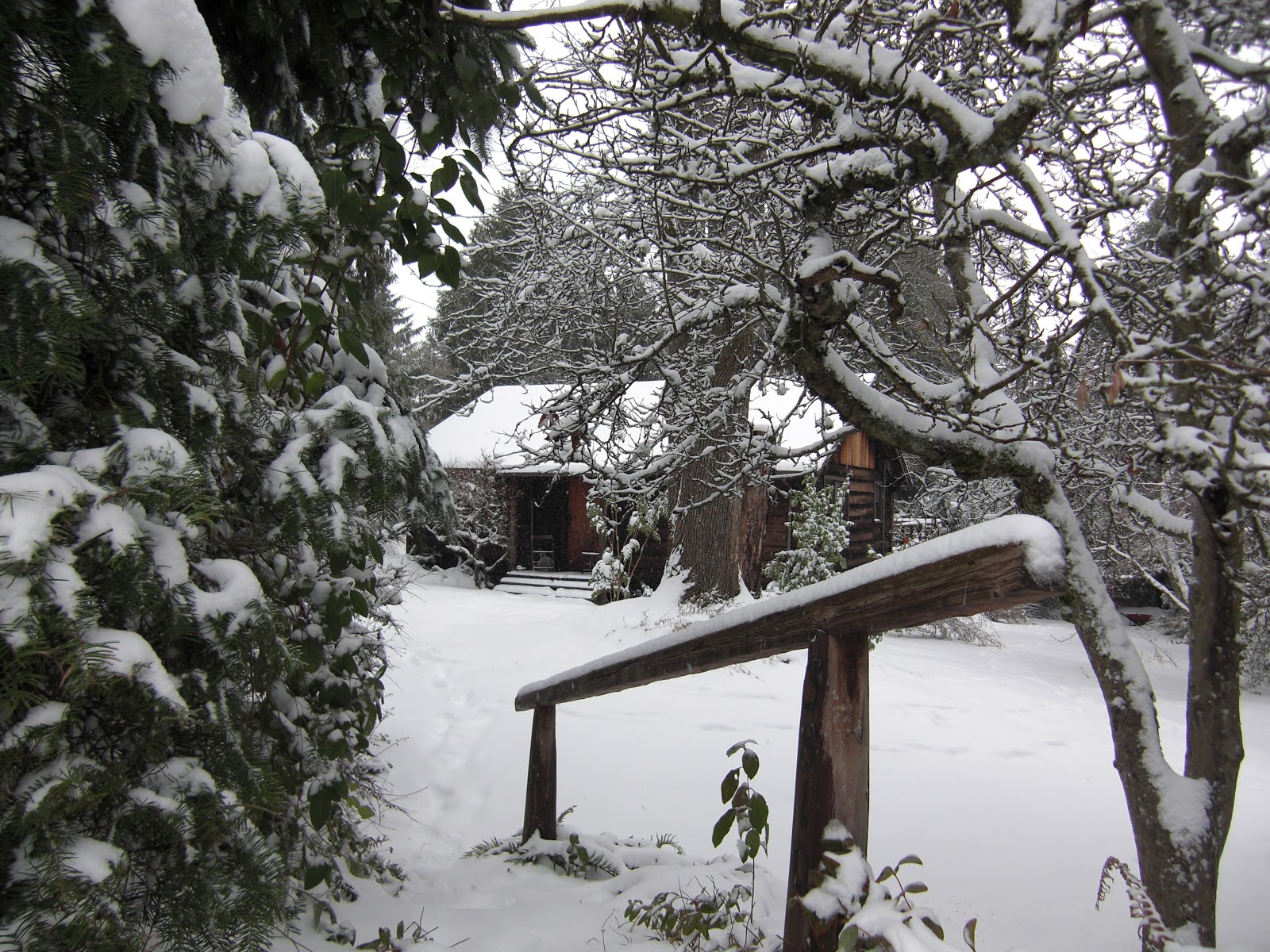
We live in a cedar cabin in the midst of Meadowbrook, a residential neighborhood in Northeast Seattle. The cabin has one large ‘great room’ with an A-frame ceiling which houses our dining area on one side, living area in the middle, and desks, shelves, dresser, changing table, and piles of laundry on the other side. Lots of built-in shelving helps us utilize our space, but nevertheless, space is tight. Cedar’s outgrown clothes, along with sleeping bags, Christmas ornaments, bedding, and all kinds of artifacts from Els and Frank are stored up in the attic. We have more storage space in an unfinished basement area too, but only for things that won’t grow moldy from the dampness.

Ideally, we’d like to add on two more bedrooms—one for Cedar and one which I could use as my office or a guest room. We’d like a large bedroom for us, along with a master bath, and we’d love a nice big kitchen with an island and shiny new appliances (our current appliances all date to the seventies). We’d love to put in a couple skylights in the living room which is always so dark due to all the tall cedars and maples surrounding our property. We’d also love a nice deck, and a two-car garage or carport.

What we want isn’t exactly extravagant, but it also isn’t going to be cheap. And we are not exactly rich. But eventually, whether we do it now or five years from now, we are going to need more room—at very least an extra bedroom for Cedar. But since it wouldn’t be architecturally that feasible or practical to just tack on one room, we might as well do more while we’re tearing down walls. So the question is, do we take the plunge, commit to a tight budget and do it now, or do we wait until we feel a little more financially sound?

Over the last couple months we’ve been doing the preliminary research. We went to our credit union and learned about interest rates for a variable rate line of credit versus a fixed rate loan. We got an estimate of what our monthly payments might be for a $100,000 loan versus a $150,000 one. We talked to a couple architects and a contractor about our ideas, and got a better sense of our possibilities. Namely, we surmised that we were not going to be able to come close to doing what we want for $100,000, and even $150,000 on the low end. Better to shoot for the $150,000-$200,000 range, because remodeling always costs more than you think, and because we’d better have some wiggle room or else we will end up very very stressed out or very very screwed—or both.  

The only problem is, we are not sure we can afford even the monthly payment for the $150,000 loan. On paper, perhaps, we can make it work. But in reality, we are not very good at sticking to a budget. Do we eat beans and rice when there’s no more money in checking to buy groceries at the end of the month? Of course not! We transfer money over from savings (or we overdraft, and our bank kindly transfers it for us, yet with no fees so we are never ‘punished’ for our carelessness). And we are not talking about a very big savings to begin with. So do we really want to take such a plunge where we will be so tight every month that there is no money to go on trips, to spend on treats, to hire a babysitter, or to stray at all from our budget?

It’s not as if we live lavishly right now by any means. Do we really want to be slaves to a monthly payment for the next 20 or 30 years? We have been blessed by the huge gift of owning a house, but not having a mortgage. I’m not sure we quite realize yet how huge this gift is. I think we might miss the freedom it affords us very quickly once this is no longer our reality. I think we might no longer care so much about the extra bedroom, the bathtub, the counter space, or even a basement free of mold. After all, I reminded my husband, we used to live not long ago in a cabin with a woodstove for heat, a compostible toilet on the porch, and no shower to speak of. When we first moved to our house (also a  cabin) in Seattle, it felt like a luxury just to have instant hot water flowing from the faucets and heat to turn on with the flick of a knob.

But of course, we quickly adapted. And of course, the older we get, the more we want, and the less tolerant we are of shitty cars and outdoor toilets. Backpacking for weeks on end in primitive conditions sounds less and less appealing, whereas having things like a nice garden, energy efficient appliances, good sharp knives, and soft down comforters become more important.

I’m pretty sure we will eventually build an addition; it seems unavoidable. And yet… if I had to choose between the freedom to still be able to write and care for Cedar versus working full-time to help us meet our payments, I’m not so sure anymore. Maybe if we wait a couple years we’ll get some of our other debt paid off and maybe Matthew will be making a bit more then and a big loan will feel more feasible and comfortable. But then, maybe by then interest rates will shoot up, Matthew’s job security will be on shaky ground, and Cedar’s school costs will start to kick in.

I know at some point we will just have to decide to do it, take the plunge and commit. I’m just not sure that time is now. I’m starting to wonder if sticking a bed in the corner of our living room for a couple years—or else just continuing to co-sleep with Cedar—might be preferable to being stuck with a huge payment that we are stretched each month to pay.

I’d love to hear from those of you who have embarked on big remodeling projects—what you’ve learned, what you’d do differently, how having the new space has improved your life, or not. What kind of stresses has the process put on your relationships?

Matthew and I have had some tense conversations just trying to get ourselves this far in the process—and we haven’t even decided to do it yet! I can only imagine how the pressure of being displaced from our home for several months, closely tracking expenses and bills, and basically living and breathing the remodel project from start to finish (which will no doubt squeeze out time for writing, for fun, for anything else)—how all of this will tax us.

It will be worth it, I think, if we can stay on a budget we are comfortable with and if we are happy with the end result-- in particular, a vision that doesn't quash the character of the cabin. But we need to really think this through first and know what we’re doing before we start. There's a time for trusting in the Universe and there’s a time for trusting in your own detailed planning. In this case, I vote for the latter.

Wednesday, October 27, 2010

Finding the Heart of the Story

Over a year ago, I received a small grant from 4Culture, a King County organization, to work on a writing project about an old friend and neighbor of mine—and the story of how I inherited his cabin. On Sunday, November 21, from 2:30 – 4:30 p.m., at the Northeast Branch of the Seattle Public Library, I will read excerpts from this project, discuss its evolution, and offer a free writing workshop to those who would like to stay on and participate.


I’ve written on this blog about Els, Frank, and the cabin before in posts titled The Gift and Love Letters, but here I will give you the gist of the story. I grew up in the house next door to Frank and Els until I was ten, when my family moved a mile to the north. Frank was a sailor, a merchant marine, a loner, an avid fan of literature, and a generous soul. Els was a writer, a philosopher, a baker, a painter, a community activist, and a lover of children. Their marriage was not always the happiest, especially since Frank was often at sea for half the year, but together they lived in a small cabin on a wooded double lot in Northeast Seattle for over forty years. They never had children of their own.


Els died in 1999, and Frank died in 2006. That spring I would learn that he had left me their house. We had become good friends over the years, but Frank had never hinted that he was considering leaving me such a huge gift. Over the next couple years I would proceed to clean and sort through decades worth of treasures that Els and Frank had collected at sea, along with boxes full of letters that they’d exchanged during their many years apart. In 2008, my husband and I were finally able to move into the cabin, and since then I have continued to sift through Els and Frank’s vast collection of slides, log books, letters, and artifacts left behind, absorbing countless intimate details from their lives.


When I applied for the grant from 4Culture, I imagined that the heart of the story would be focused on the process of inheriting their cabin and things; the strained dealings with Frank’s relatives; and the legacy and weight of the possessions that we each collect and pass on. But as I’ve continued to dig deeper into the artifacts and letters. I’ve begun to realize that what I once thought was the heart of the story is perhaps only the back story, and that the true trajectory of this story is still being lived out as my husband and I and our seven-month-old son begin to imprint our own roots in this cabin, and as I continue to read Els and Frank’s letters which prompt me to reflect on the myriad dimensions of these things that we call family, home, work, longing, and purpose.


I devoted much time during my pregnancy to this project, especially to reading the letters. Now, the time has come for me to present to the public what I have accomplished during the year and a half that has passed since receiving the grant, and to thank 4Culture for the role that they have played in helping me giving birth to this book-in-progress.


I invite you to join me on Sunday, November 21, from 2:30 - 4:30 p.m., at the Northeast Branch of the Seattle Public Library, where I will first give a reading, and then, around 3:30 p.m., offer an informal writing workshop for those who would like to stay and write. I will offer prompts for you to free-write from—focusing on the themes of our loved ones, homes, and possessions—as well as an open space for us to share.

Friday, November 13, 2009

Love Letters

I’ve been reading letters between a husband and a wife who lived half of their marriage apart. Letters that span over four decades, letters I found over three years ago in a cardboard box in the attic of the home that I inherited (see my old post: The Gift). Right away, I read dozens in a frenzy of new discovery, then quickly grew overwhelmed with how many there were, not to mention the tiny, hard-to-read cursive script. So I ordered them by date, then grouped them by year and sealed them in plastic bags which I stacked in a big blue bin to save for later. Now, in the last couple months, I’ve returned to them, and made it through two decades so far —the 1950s and 1960s.

Els and Frank wrote to each other as often as every other day, and were apart for as much as half the year. Frank was a merchant marine and spent much of his time delivering and picking up goods from Japan, Korea, Hong Kong, the Philippines, as well as ports in South America. For several summers he also fished for salmon up in Alaska, outside of Cordova or in Bristol Bay. Els stayed at home, saving and investing the money he earned. Sometimes she worked part-time as a secretary or an interior designer, but mostly she was good at being frugal and working on their home. She vigilantly planted and weeded; she picked and de-wormed hundreds of apples to make sauce or freeze slices for pies for when her husband returned; she scrubbed and waxed the floors, washed the walls, and scoured the toilet more than I’ll ever hope to do; she sewed her own clothes, baked her own bread and hung loads of laundry up to dry. She diligently reported to her husband how much she saved on used goods or home repairs, and how much she went without so that they could save his hard-earned money for when they were together. For, after all, she once said, let us not forget that money is the reason we are apart.

Sometimes, Frank came home for only a couple months, just enough time to be properly fed and made love to by his wife, before setting off again in the company of sailors. But other times, they’d have whole winters or summers together where they would take long road trips, for up to six months. A few years in a row they drove down to Mexico, camping in the back of their white Ford station wagon at R.V. parks on bluffs overlooking the sea, staying for months within communities of expats, mostly couples or families with young kids. Frank contented himself with reading, walking, and whittling at wood. Els would go to the market and haggle for local prices on produce and meat, then cook hearty, locally-inspired meals on their camp stove like pescado veracruz or beans, tortillas, and rice. Both of them loved to read, and Els loved to write. They collected pre-Colombian artifacts and read up on local history. Many of the things in their home probably came from Mexico—old brass candlesticks, stirrups, pottery, and blankets. They also collected arrowheads, awls, and other old Indian tools at favorite spots up and down the West coast. In the early sixties they started spending whole summers on their new sailboat (a converted Bristol Bay fishing vessel which Frank put a cabin on), the Hoko. From the Canadian shores of the Inside Passage they collected artifacts—old trading beads, tools, and baskets.

Els was a thirty-some-year-old housewife in the 1950s with no children and with a husband at sea. The older she grew, and the more time she spent alone, the more “out there” to many she became. She was interested in psychology, art therapy, classical music, Chinese art and poetry, the mind, belief systems, alternatives to religion. Ever since she was a child, she’d rejected her fundamentalist Christian upbringing, and some of her letters hint at a history of mental illness, as well as emotional abuse, in her family. As she grew older, she wrote more poetry and started to paint. She grew interested in transcendental meditation and local politics, even starting her own campaign against smoking in public places. In the absence of a career, close friends, or family, she reached out to join or spearhead various causes, causes that later might have become obsessions, obsessions that existed in her mind.

Frank also loved art and literature, but was less interested in philosophy and causes. It was what it was. If he would have been interested in philosophy, he might have realized just how Zen he was—but he wasn’t. The older they grew, the more it seems he simply tolerated Els’s interests, but did little to try and share them with her. If I had not known Frank in real life and had to judge him solely on his letters, I would find him rather dull. Els wrote long, intricate letters, sometimes filled with gossip and petty remarks, but always vivid with details, dreams, frustrations, hopes, and the wanderings of her mind. Frank rarely responded to the specific things she said unless it was of a practical nature; instead he mostly just stated where he was, what port they’d be in next and for how long, how he’d look for whatever items that she’d requested (stereo equipment, straw matting, Japanese bowls), and how she should feel free to spend money or invest as she saw fit. Then he’d apologize for his lack of verbosity and thank her for her many good letters. Sometimes he might profess his love or his increasing longing for her and would speak of how she was the center of his life. But just as often his letters felt distant and cold, a few hurried scribbles in contrast to her long, diary-like accounts. If I were Els, I would have grown frustrated with his brevity. After all, they had no email and made no phone calls while he was away; all they had was this air mail correspondence. Letters took about a week to get from Seattle to the many far-flung ports. They lived years of their lives in this staggered time, one week apart in their news.

I can only read so many letters at once before I get burnt out and need to take a break. I read quickly, flying past the mundane details about people I don’t know, seeking out passages that hint at the inner fabric of their marriage—why they never had children, how they convinced themselves this was the best arrangement, how they related to their parents and siblings, how they related to each other as emotional, spiritual, and sexual beings. I also search for clues about the house—what repairs did they make or plan to make, when did they plant certain bushes or trees that are now thirty feet high, what was the neighborhood like at that time, how did they enjoy or bemoan this space that I now call my home.

I am surprised to read how from the year they moved in, Els wanted to build an addition and finish the basement. Fifty-some years at this house, and they never accomplished either. She complained of how dark, dusty, and damp the house was, how there was a lack of storage space, and how the basement was filled with mold—the same complaints we have now. In latter years, they had plenty of money from investments to spend on these improvements, but it seems they barely put a dime into the cabin besides whatever repairs they could jimmy-rig on their own. Having grown up in the Depression, they were models of thrift and resourcefulness, but it’s still hard for me to believe that they never put more into their home—which may also represent what went neglected in their marriage.

It’s understandable that the cabin was not a priority to Frank, with him at sea for half of the year, and with them both away during the summers, cruising the Inside Passage from the 60s to 80s. Frank was a wanderer at heart, and Els, at least at first, was a willing and wonderful companion. If I lived alone in this house year after year with no career, and no close friends nor family nearby, without even the Internet to keep me company, I too would surely jump at the chance to pack up and get away into nature for the summer with my only lover and best friend.

***

As a child and as an adult, I looked at Els and Frank’s lifestyle with admiration and respect. Here were two adults, older than my parents’ generation, who bucked traditional societal roles and lived simply in a small cabin or otherwise traveled and followed their heart’s content. Here were two elders I was privileged to know who modeled so many things that I value in life: a love for literature and art; thrift and a homemade do-it-yourself aesthetic; healthy organic cooking, gardening, canning, and baking; a philosophical mind that questioned the status quo and so-called reality; and most of all, a love for the outdoors, for camping, sailing, and world travel.

All of this is still true—I still admire Els and Frank for who they were and for the life they led. But now, with access to this intimate window into their life through their letters, I have another view of them and their marriage. I see a woman who was incredibly lonely, grasping for purpose, and troubled by her past. I see a man who loved his wife, but who could be distant and inaccessible, and who for whatever reasons chose to be apart from her for half of the year. True, sailing was his bread and butter, but I can’t help but think that if he wanted to, if he loved her companionship more than he loved his capacity to be away, he wouldn’t have stayed at sea for so long.

Unfortunately, I don’t have as many records from the times they were traveling together, the times when they were probably the happiest. Instead, I’ve been left with a record of their gaps and distances, of their accumulated loneliness and longing. I’ve been left with a huge box full of letters, a testimony to a union that was tested, and to a love and loyalty proven yet stretched apart.

Tuesday, May 19, 2009

The Gift


I live next door to the house I grew up in.

I inherited my home from my old neighbor.

Frank was a good friend. His wife, Els, died ten years earlier, and I was close to her too, growing up as a child. But after she died, I grew closer to Frank and came to know him as an adult. He was diagnosed with cancer during the last couple years of his life, but he still managed to get out and work in the yard, do many of the things he'd always done. He was fiercely independent, stoic, and private, so he never asked for help with anything. Towards the end, he seemed to have reached a certain peace with his life and upcoming death. He died over three years ago in early May.

Frank never told me he planned to leave me his house. I found out when his nephew read Frank's will out loud at a small memorial service held by the family. My breath grew heavy and my face began to tingle. I felt overwhelmed, blown away, guilty, amazed, ecstatic. I didn't know how the family felt about it, this stranger in their midst who'd been left the biggest prize of all. They all seemed to have learned the news before I had; perhaps they'd had some time to digest its shock and thus hide their emotions. I wanted to express to them how much I would honor this gift. And yet, in that moment, all I could do was sit back in a surreal state of gratitude as the others were encouraged to put yellow sticky notes with their names on the things they wanted.

Els and Frank didn't have any children. This last bit of information seems important to disclose to help explain how I was left such a huge gift from someone who was not a blood relative. I only saw Frank once every couple months or so back then. I was living in Olympia and would try to visit him whenever I was back in Seattle. Frank would make a pot of black tea and put out a plate of cookies (Grandma's oatmeal or dark chocolate Little Dutch Boys), and then we'd sit at the dining room table and talk. I'd talk about my writing or my latest travels, and he'd tell me about what books he was reading or share news from his family. Always there'd be a huge stack of books he'd gotten from Magnuson's biannual book sale; he was an avid reader, sailor, and traveler and thus fond of books about ships and the sea, about early colonial explorers, about Native Alaskan art, about South American culture. He was also a huge fan of Conrad, Hemingway, Melville, James, Austen, and others.

Books were great entryways into conversations about life, about literature, about the world. I embarrassingly admitted that I hadn't read most of the classic canon, though some day I wanted to. Once he gave me an extra copy of Pride and Prejudice to read, and try as I did, I couldn't get through it. Likewise, he called one of the books I lent him (Tim O'Brien's The Things they Carried, set during the Vietnam War) the "worst junk he'd ever read." He thought it was a completely inaccurate representation of war, and of course I couldn't argue otherwise. Frank had served during WWII, though he rarely shared his war stories with me. One day he told me that he read a book that was even worse than the one I'd lent him; someone had given him Tuesdays with Morrie, complete crap. I laughed and was relieved that I could agree with him on this one-- sentimental chicken-soup-for-the-soul life and death lessons for the masses. Not literature.

But books weren't the only thing that we connected through. There was so much about Frank and Els, their home-- a cedar cabin surrounded by tall maples and cedars--, and the way they lived that I resonated with. Frank was a merchant marine, and spent much of his life traveling around the world. Els was a poet, and loved to paint, bake, and philosophize about the meaning of the universe. Every summer the two of them would set out in their sailboat, the Hoko, and cruise up the sound into the waters of the Inside Passage off the shores of Canada. On board for months, they bathed and washed their clothes in the water; read, wrote, and cooked hearty meals on a woodstove in the cabin; visited old Indian villages, some abandoned, some still inhabited; combed the beach for shells, rocks, beads, and bottles; climbed up into old orchards and collected apples, berries, and stories from the locals that came to know this American couple who visited each summer.

They knew how to live a simple, yet decadent life, filled with earthly pleasures. They were extremely frugal, having lived through the Depression, yet their home was filled with treasures from around the world-- woven baskets, wooden chests, woolen blankets, copper pots, bowls of shells and arrowheads. As a child, I relished in the sheltered mossy enclave that was their yard; I inhaled the scent of baking bread, pies, and cookies; I spent hours on their floor arranging smooth black stones into intricate patterns before the giant fireplace. At their home, I felt enveloped in a natural goodness and beauty.

As an adult, spending more time alone with Frank, I looked to him as an example of how life could be lived. One didn't have to spend the entire year working, mired in busy-ness with no time to sit back, listen, sail, cook, and read. One didn't have to acquire a lot of things or a big house or a fancy title or big ego. And one didn't have to only live a settled life or a wandering life, either or-- there were ways to navigate a balance in between. There were ways, it was possible. Here was an elder who understood my impulses. Here was an elder who valued silence, literature, and solitude, as much as he valued people, children, and world cultures. Here was an elder who carried so much wisdom, and yet who was so humble. He knew he didn't have much time. He was a living lesson in how to not cling or hold on too tight. As far as I could tell, he had no regrets. As far as I know, he'd followed his whims and heart in life. And he'd come out okay. In fact, more sane and at peace than almost anyone I knew.

Frank left me a gift, and in moments I am still reeling. After several years of dealing with the probate, a long drawn-out process sorting through possessions and deeds and titles with the family, and a few interim periods where friends or renters stayed in the house, my husband and I finally uprooted from Olympia last summer and moved in.

Now, I live next door to the house I grew up in. I live in the magical secret garden next door, the one with the hidden raspberry patch and giant pile of composting leaves. There is so much more I want to tell you about this still unfolding process -- about the months of cleaning and going through someone else's things; about the discovery of old letters between husband and wife in the attic; the basement filled with artifacts from the sea; the flickers, raccoons, squirrels, and jays that also call this place their home; the yard filled with native plants-- ferns, salal, oregon grape, salmonberries-- and my burgeoning obsession with naming and pruning and caring for these plants that I may very well tend for a lifetime.

LinkWithin

Related Posts Plugin for WordPress, Blogger...